
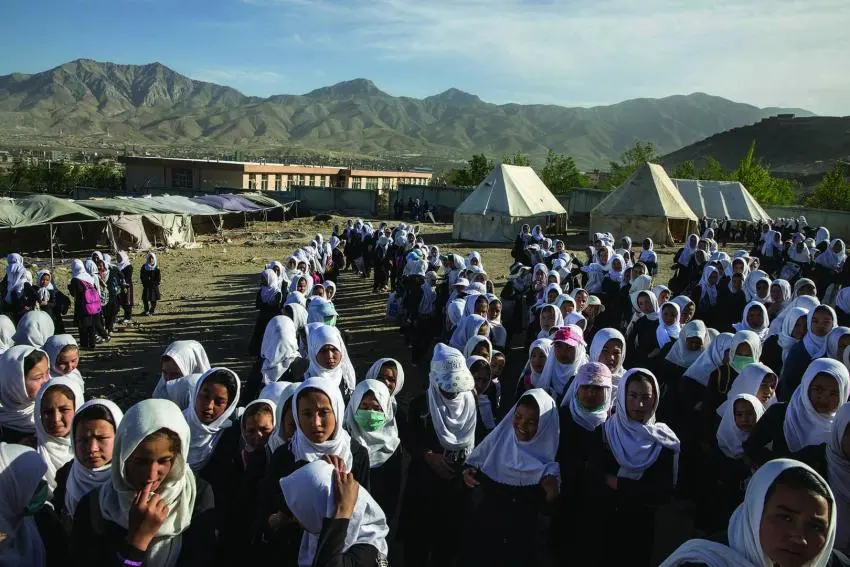
The Taliban’s recent takeover of Afghanistan has raised concerns about the fate of women in the country. One of the most alarming signs has been the Taliban's decision to prohibit women from attending universities. In the past, the Taliban had banned women from education altogether, but in recent years, some progress had been made, and women were allowed to study at universities. However, with the Taliban back in power, the future of women’s education in Afghanistan is uncertain.
The Taliban’s decision to ban women from attending universities has led to widespread outrage and condemnation. Many see this as a significant setback for women’s rights and an indication that the Taliban has not changed its hardline stance on women’s issues.
The Taliban has justified its decision by stating that it is necessary to maintain “Islamic values.
According to the Taliban, women will be allowed to study at universities, but only in segregated classrooms and under strict Islamic dress codes. This has been met with skepticism by many who fear that the Taliban’s definition of “Islamic values” is narrow and oppressive.
The decision to ban women from attending universities has already had significant consequences. Many female professors and students have been forced to leave their jobs and studies, and several universities have been forced to close due to lack of female students. This has also had a ripple effect on the economy, as educated women play a significant role in the country’s development.
The international community has expressed concern about the Taliban’s decision to ban women from attending universities. Several countries have called for the Taliban to respect women’s rights and allow them to attend universities. The United Nations has also issued a statement condemning the decision and calling on the Taliban to ensure that women have access to education.
Despite the international pressure, the Taliban has shown no signs of backing down. In fact, the Taliban has warned that it will take action against any women who try to attend universities. This has led to fears that women’s education in Afghanistan could be set back by decades.
The situation in Afghanistan is complex, and there are no easy solutions. However, it is clear that the Taliban’s decision to ban women from attending universities is a significant setback for women’s rights and a blow to the country’s development. The international community must continue to pressure the Taliban to respect women’s rights and ensure that women have access to education.
In the meantime, there are organizations working to provide education to women in Afghanistan. These organizations are running underground schools and offering online classes, providing hope for women who are determined to continue their education. While these efforts are admirable, they cannot replace the formal education that universities provide.
The Taliban’s decision to ban women from attending universities is a significant setback for women’s rights and a blow to Afghanistan’s development. Despite international pressure, the Taliban has shown no signs of backing down. However, there are organizations working to provide education to women, providing hope for those who are determined to continue their education. The situation in Afghanistan is complex, and the future of women’s education is uncertain, but it is crucial that the international community continues to pressure the Taliban to respect women’s rights and ensure that women have access to education.
© Copyright 2022. All Rights Reserved.